



In the fast-paced world of software development, writing code is only half the battle. The real challenge lies in ensuring that code works reliably under every condition it might encounter. This is where white-box testing shines in unit tests, giving developers and QA teams a transparent view into the internal structure of the code to design smarter, more effective tests.
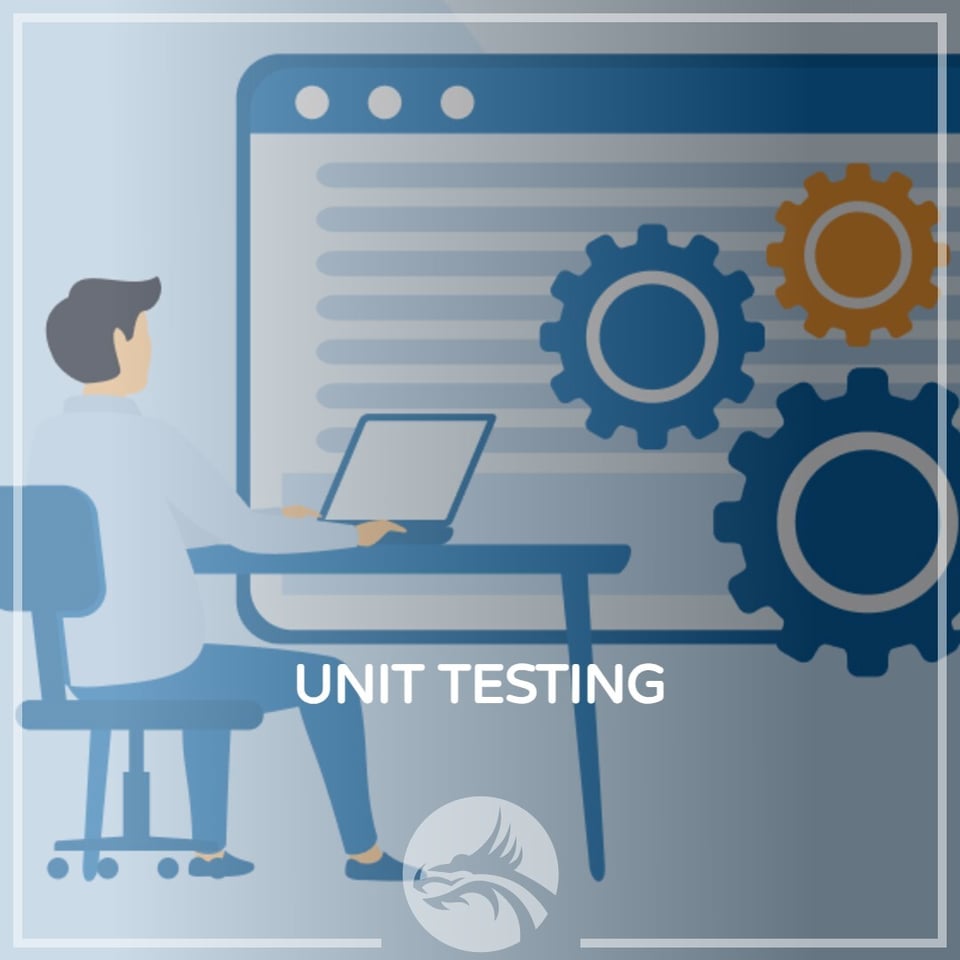 Unit testing is very crucial in modern software development
The Coverage Criteria that Separate Good Code from Bulletproof Software
If you're serious about building stable, high-quality software, understanding test coverage criteria isn't optional—it's essential. Today, we'll dive deep into the most important white-box coverage techniques: statement coverage, branch coverage, condition coverage, and the gold standard for safety-critical systems, Modified Condition/Decision Coverage (MC/DC).
Statement Coverage: the Essential Starting Point
Imagine your code as a house with many rooms. Statement coverage asks a simple question: Have you walked through every room at least once?
Technically, statement coverage measures the percentage of executable statements in your program that have been run by your test suite. It's the most basic and widely used white-box metric. In practice, many teams aim for 80-90% statement coverage as a solid benchmark.
Real-world example: Consider a simple function that prints the sum of two numbers (A and B):
result = A + B
if result > 0:
print("Positive sum:", result) # Statement 4
else:
print("Non-positive sum:", result)
if result < 0: # Statement 6 (inside else)
print("Negative sum")
print("Done")
One test with positive inputs (A=3, B=9) might cover ~71% of the statements. A second test with negative inputs (A=-5, B=-8) pushes it higher. Combine them, and you reach 100% statement coverage.
The beauty of statement coverage is its simplicity. If a faulty statement exists, you must execute it to have any chance of discovering the bug. However, it has limitations: it doesn't guarantee that every possible path through decision points has been explored.
Branch Coverage: Going Beyond the Surface
Branch coverage takes testing to the next level by focusing on decisions. It requires that every possible outcome (true and false) of each decision point, every if, while, for, etc., is executed.
In our print sum example, there are two decision points, creating four branches total. The two tests that achieved 100% statement coverage only hit 75% branch coverage. Adding one more test case (A=0, B=0) finally covers the missing false-false path.
Key insight: Branch coverage subsumes statement coverage. Any test suite that achieves 100% branch coverage automatically achieves 100% statement coverage, but the reverse isn't true. This makes branch coverage a stronger (and more expensive) criterion that typically requires more test cases.
Condition Coverage: Testing the Building Blocks
Now things get more interesting. Consider this code snippet:
if (X != 0 || Y > 0) {
Y = Y / X; // Potential division by zero!
} else {
X = Y + 2;
}
Two tests that fully satisfy branch coverage (one where the overall condition is true, one where it's false) might still miss a critical bug. What if X equals zero?
Condition coverage requires that each Boolean sub-expression (every condition) evaluates to both true and false at least once, regardless of the overall decision outcome.
This extra granularity helps uncover subtle issues hidden within complex predicates.

MC/DC: the Gold Standard for Mission-Critical Software Pyramid
For aviation, medical devices, and other safety-critical domains, even condition coverage isn't enough. Regulatory bodies like the FAA and FDA often mandate Modified Condition/Decision Coverage (MC/DC). MC/DC strikes a brilliant balance that requires:
-
Every decision (overall predicate) to evaluate to both true and false.
-
Every individual condition to evaluate to both true and false.
-
Each condition to independently affect the decision outcome.
Why MC/DC Exists
-
Branch/Decision Coverage: Ensures every decision (if, while, etc.) evaluates to both True and False.
-
Condition Coverage: Ensures every individual Boolean condition evaluates to both True and False.
-
MC/DC goes further: It requires that each condition independently affects the outcome of the decision.
This independence is the "Modified" part: it proves that flipping a single condition (while keeping others fixed) actually changes the overall result.
Some Examples
Predicate: if (A && B && C)
1. Full Multiple Condition Coverage (All combinations)
There are 2³ = 8 possible combinations:
| Test | A | B | C | Decision (A && B && C) |
|---|---|---|---|---|
| 1 | True | True | True | True |
| 2 | True | True | False | False |
| 3 | True | False | True | False |
| 4 | True | False | False | False |
| 5 | False | True | True | False |
| 6 | False | True | False | False |
| 7 | False | False | True | False |
| 8 | False | False | False | False |
2. MC/DC Minimal Set (Only 4 test cases)
We only need pairs where exactly one condition changes and the overall decision flips.
Here is a minimal MC/DC-compliant set:
| Test | A | B | C | Decision | Purpose |
|---|---|---|---|---|---|
| 1 | True | True | True | True | Base case |
| 5 | False | True | True | False | Shows that A independently affects the outcome |
| 3 | True | False | True | False | Shows that B independently affects the outcome |
| 2 | True | True | False | False | Shows that C independently affects the outcome |
Why only these four?
-
A is shown independent: Compare Test 1 vs Test 5 (only A flips → decision flips).
-
B is shown independent: Compare Test 1 vs Test 3 (only B flips → decision flips).
-
C is shown independent: Compare Test 1 vs Test 2 (only C flips → decision flips).
All conditions are exercised as True and False, and the overall decision is both True and False.
Predicate: if (A || B)
A minimal MC/DC set:
| Test | A | B | Decision | Purpose |
|---|---|---|---|---|
| 1 | True | False | True | Shows A can make it True |
| 2 | False | True | True | Shows B can make it True |
| 3 | False | False | False | Both False |
This demonstrates an independent effect for both A and B.
Predicate: if ((A && B) || C)
One possible MC/DC set (there can be multiple valid sets):
| Test | A | B | C | Decision | Notes |
|---|---|---|---|---|---|
| 1 | True | True | False | True | (A&&B) makes it True |
| 2 | False | True | False | False | Shows A affects (A&&B) |
| 3 | True | False | False | False | Shows B affects (A&&B) |
| 4 | False | False | True | True | Shows C independently makes it True |
Key Benefits of MC/DC
-
Much stronger than branch or condition coverage.
-
Proves causality: each condition can actually influence the result.
-
Significantly fewer test cases than full combinatorial testing (exponential vs roughly linear).
-
Required by standards in several regulated environments.
Putting It Into Practice
Start simple:
-
Measure statement coverage on your unit tests.
-
Push toward branch coverage where feasible.
-
For complex decision logic, incorporate condition coverage.
-
Reserve MC/DC for your most critical modules.
Modern tools (coverage analyzers in IDEs and CI/CD pipelines) make tracking these metrics straightforward. The investment in thorough unit testing pays dividends through fewer bugs, faster debugging, and more maintainable codebases.
No More Testing Headaches with NUCIDA!
Building top-notch software doesn’t have to be a struggle. At NUCIDA, we’ve cracked the code with our B/R/AI/N Testwork testing solution - pairing our QA expertise with your test management tool to deliver streamlined processes, slick automation, and results you can count on. On time. Hassle-free. Ready to ditch future headaches? Let NUCIDA show you how!

Among others, NUCIDA's QA experts are certified consultants for Testiny, SmartBear, TestRail, and Xray software testing tools.
Why Choose NUCIDA?
For us, digitization does not just mean modernizing what already exists but, most importantly, reshaping the future. That is why we have made it our goal to provide our customers with sustainable support in digitizing the entire value chain. Our work has only one goal: your success!
- Effortless Tool Setup: We’re test management wizards, simplifying setup and integrating it with your favorite testing tools. Boost efficiency and accuracy with configurations tailored to your unique goals - complexity made easy.
- Superior Test Management: Our expert consulting supercharges your test management experience. Whether you’re launching a test management tool or leveling up, we streamline your testing for top-notch outcomes with precision and customization.
- Top-notch Automation: Our certified automation pros build frameworks that fit like a glove, integrating seamlessly with common test management solutions. From fresh setups to fine-tuning, we deliver fast, flawless results.
- Flawless Test Execution: Our certified testers bring precision to every manual test, ensuring your apps shine with unbeatable reliability and performance. Quality? Nailed it.
- Insightful Reporting: Unlock game-changing insights with your tool's reporting tweaked to your needs. Our detailed quality reports empower smart, reliable decisions at every level.
- Proven Reliability: With 30+ years of experience, proprietary frameworks, and certified expertise, we craft efficient, easy-to-maintain solutions that keep you ahead of the curve.
Don’t let testing slow you down. Explore how consulting services can make your software quality soar - headache-free! Got questions? We’ve got answers. Let’s build something amazing together!
Best Practices in Unit Testing
Here’s a curated, battle-tested list of the top 10 best practices that separate average unit testing from professional, high-quality testing:
1. Follow the AAA Pattern (Arrange-Act-Assert)
-
Arrange: Set up the test data and dependencies.
-
Act: Execute the code under test (usually one method call).
-
Assert: Verify the outcome.
This structure makes tests readable and consistent. Avoid mixing these phases.
def test_add_positive_numbers():
calculator = Calculator() # Arrange
result = calculator.add(3, 5) # Act
assert result == 8 # Assert
2. Write Clear, Descriptive Test Names
-
Bad: test1(), testLogin()
-
Good: test_login_fails_with_invalid_password(),
test_calculate_total_with_negative_values_throws_exception()
Use the Given-When-Then style in naming or comments for maximum clarity.
3. Test Behavior, Not Implementation
Focus on what the code should do, not how it does it. This allows you to refactor internals without breaking tests. Avoid testing private methods directly. Test through public APIs.
4. Keep Tests Small and Focused (Single Responsibility)
-
One test = one scenario.
-
Prefer one logical assertion per test (or a few closely related ones).
-
Small tests are easier to understand, debug, and maintain.
5. Make Tests Fast
-
Fast tests (< 1ms ideally) encourage developers to run them frequently.
-
Avoid I/O (files, databases, networks) in unit tests.
-
Use mocks, stubs, and fakes for external dependencies.
-
A test suite that takes > 30 seconds loses developer adoption.
6. Ensure Tests Are Independent and Isolated
-
No test should depend on another test’s state.
-
Avoid shared global state or test order dependency.
-
Use a fresh setup (@BeforeEach / setUp()) for each test.
7. Aim for High Code Coverage, But Use It Wisely
-
Target 80-90%+ statement/branch coverage for most code.
-
Focus coverage on complex and critical logic (use MC/DC for safety-critical parts).
-
Don’t chase 100% blindly — some code (e.g., getters, trivial constructors) may not be worth testing.
8. Use Test-Driven Development (TDD) When Appropriate
Red → Green → Refactor cycle:
-
Write a failing test.
-
Write the minimum code to make it pass.
-
Refactor.
TDD leads to better design, higher test coverage, and more confidence.
9. Mock External Dependencies Properly
-
Use mocks for databases, APIs, services, time, random, etc.
-
Popular libraries: Mockito (Java), unittest.mock (Python), Moq (.NET), Jest (JS).
-
Verify interactions when needed (verify()), but don’t over-mock.
10. Treat Test Code as First-Class Code
-
Refactor tests regularly.
-
Apply DRY (Don’t Repeat Yourself) thoughtfully (use helpers, factories, test data builders).
-
Keep tests readable and maintainable — they are living documentation.
-
Delete obsolete tests.
Additional Hints
-
Use Proper Test Data: Prefer realistic values and edge cases (empty, null, zero, max values, invalid inputs).
-
Leverage Parameterized Tests: Test multiple inputs with one test method (great for reducing duplication).
-
Continuously Run Tests in CI/CD: Tests should run on every commit/pull request.
What is the Goal of Unit Testing?
Unit testing isn't about catching every possible error. It's about systematically reducing risk and building a deeper understanding of your code. By mastering statement, branch, condition, and MC/DC coverage, you move from simply "testing" code to truly engineering reliability.
What coverage levels does your team target? Have you encountered situations where higher coverage revealed hidden bugs? Share your experiences in the comments!
Happy testing, stay safe, and see you next time!

Want to know more? Watch our YouTube video, Common Test Design Techniques in Unit Testing, to learn more about the explained design techniques and get some further insights.
Pictures / Logos from pixabay.com and NUCIDA Group
Article written and published by Torsten Zimmermann
Any questions or hints? Please leave a comment...